by Daniel Hathaway
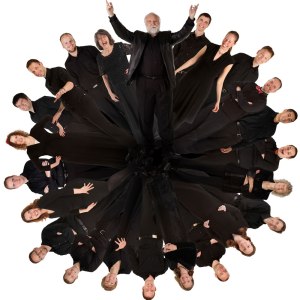 On Friday evening, September 26 at St. Paul’s Episcopal Church in Cleveland Heights, Ross W. Duffin led the 22 professional singers of Quire Cleveland in a splendid survey of music by fifteenth and sixteenth-century composers who were born in the region we now call Belgium.
In other hands, the program, titled “The Flower of Flanders: Masterpieces of Renaissance Polyphony,” might have been like sitting through a fact-filled lecture in a music history course. In Duffins’s case, it turned out to be more like visiting a beautifully-curated, special exhibit in an art museum, perhaps one where the sixteen “pictures” on the walls, like something out of Harry Potter, came alive and sang to you as you approached them, each revealing the distinct personalities of their creators as well as the surprising range of their individual musical styles. Read the rest of this entry »
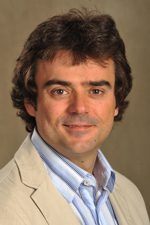 There’ll be a festive fanfare when Spanish-born conductor Octavio Más-Arocas conducts his first concert with the Baldwin Wallace Symphony Orchestra on Friday, September 26, but that new piece by Kevin C. Thompson is only the first of several curtain-raisers BW’s new orchestral maestro has planned in a continuing series he calls “The Symphony Orchestra Fanfare Project.”
 As fascism and other forms of dictatorship engulfed Europe in the 1930s and ’40s, the United States began to fear that the whole world would be consumed by such regimes. To prevent totalitarianism’s spread to Latin America, the federal government enacted a “Good Neighbor” policy, in which the U.S. encouraged solidarity between the Americas.
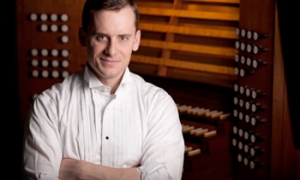 American organist Jonathan Ryan will open this season’s organ series on the E.M. Skinner instrument in Youngstown’s Stambaugh Auditorium on Sunday, September 28 at 4:00 pm.
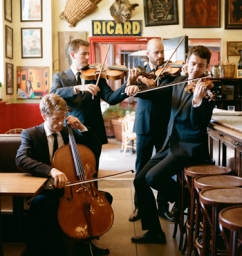 As their first “official” duty as Quartet-in-Residence at the Oberlin Conservatory, The
 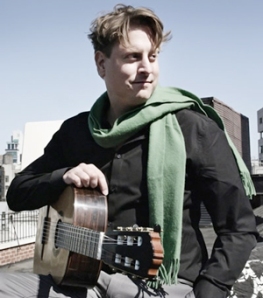 “This week’s concert is going to be really great,” classical guitarist Jason Vieaux exclaimed during a recent telephone conversation. On Saturday, September 27, beginning at 7:30 pm in Plymouth Church in Shaker Heights, the Cleveland Classical Guitar Society will begin its International Series. And in keeping with tradition, the series will kick off with a free
 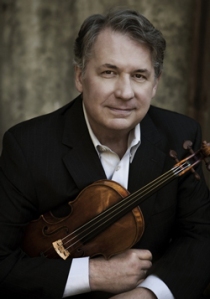 We took advantage of a last-minute opportunity to chat on the phone with violinist Philip Setzer of the Han-Setzer-Finckel Trio on the morning before the ensemble’s performance on the Cleveland Chamber Music Society series on Tuesday, September 23 at 7:30 pm at Plymouth Church in Shaker Heights.
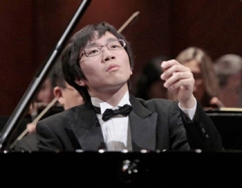 Last Saturday night the Youngtown Symphony opened its season with an excellent concert of Romantic audience favorites. The evening’s highlight was a scintillating performance of Sergei Rachmaninoff’s Rhapsody on a Theme of Paganini, Opus 43 by the gifted Japanese pianist Tomoki Sakata. Sakata was a finalist and the youngest competitor at the 2013 Van Cliburn International Piano Competition in Fort Worth, Texas.
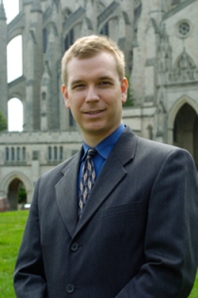 During his tenure as organist of Washington National Cathedral, Erik Wm. Suter introduced the organ to thousands of tourists in weekly recitals, astutely planning his programs to immediately grab the attention of listeners who might never have attended an organ recital before, then moving on to show the palette of colors a large pipe organ could produce and the range of musical styles it could handle.
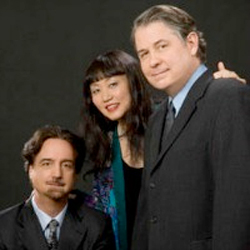 The famous piano trio with no name of its own, consisting of pianist Wu Han, violinist Philip Setzer and cellist David Finckel, will launch the sixty-fifth season of the Cleveland Chamber Music Society at Plymouth Church in Shaker Heights on Tuesday, September 23 at 7:30. The program will include Beethoven’s Trio in G, op. 1, no. 2, Shostakovich’s Trio No. 2 in e, op. 67 & Mendelssohn’s Trio in c, op. 66. A 6:30 pm pre-concert lecture will feature WCLV’s Robert Conrad in a talk entitled “Not Your Father’s Radio Station.”
 This weekend the Cleveland Museum of Art Performing Arts series will begin its new season with two events featuring the music of 2014 Pulitzer Prize-winning composer John Luther Adams.
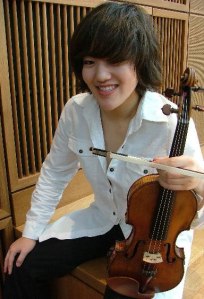 Cleveland based violinist Jinjoo Cho has been named one of six contestants to be advanced to the final round of the 9th Quadrennial International Violin Competition of Indianapolis.
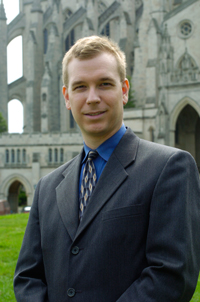 Former Washington Cathedral organist Erik Wm. Suter will play a recital on the Holtkamp organ in St. Paul’s Episcopal Church in Cleveland Heights on Saturday, September 20 at 5:00 pm. The big question is whether he’ll fly himself to Cleveland.
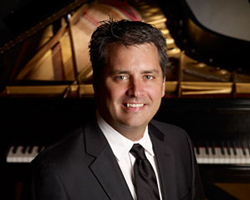 Though pianist Robert Cassidy, formerly on the faculties of The Music Settlement and Cleveland State University, decamped last spring for California to join his wife at the Music Academy of the West, he remains committed to Northeast Ohio as pianist with the Almeda Trio and plans to travel to Cleveland for concerts with that Music Settlement-based ensemble.
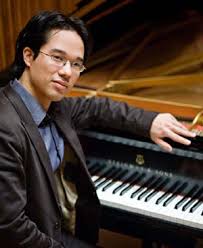 What could be more delightful than two sparkling early Beethoven works featuring a riveting young pianist and a fine chamber orchestra, all wrapped up in a 75-minute concert format and presented without intermission? That was the recipe for success as the Blue Water Chamber Orchestra opened its latest season on Saturday evening, September 6 at the Breen Center in Ohio City. The program consisted of Beethoven’s first symphony and first piano concerto, with Cleveland pianist Zsolt Bognár at the Steinway and music director Carlton Woods on the podium.
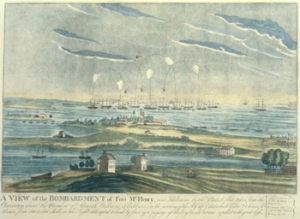 Two hundred years to the day from the eventful night in Chesapeake Bay when the Baltimore lawyer Francis Scott Key watched the British Royal Navy’s bombardment of Fort McHenry during the War of 1812 and penned the poem that begins, “O say can you see by the dawn’s early light,” the Akron Symphony will mark the birth of the United State’s eventual National Anthem with a program of music by Dudley Buck, Beethoven, Charles Ives and Michael Gandolfi on Saturday, September 13 at 8:00 in E.J. Thomas Hall at the University of Akron.
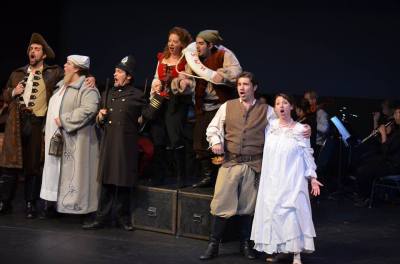
 When Gilbert & Sullivan’s Pirates of Penzance premiered in New York on December 31, 1879, the two-act comic opera was immediately popular with audiences and critics alike. Today Pirates remains one of Gilbert & Sullivan’s most-performed operas. This weekend,
 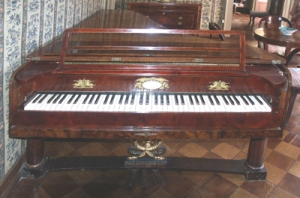 When Oberlin faculty violinist Marilyn McDonald and pianist David Breitman play Beethoven sonatas in the Conservatory’s Kulas Recital Hall on Saturday, September 13 at 4:30 pm, they’ll be joined by the latest addition to Oberlin’s impressive collection of historic keyboard instruments. An Anton Zierer fortepiano built in Vienna in 1829 came to live in Oberlin last summer and has kept Robert Murphy, the conservatory’s curator of fortepianos, busy getting it settled into a new environment.
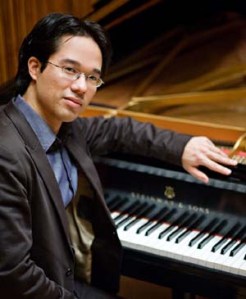 Under its music director Carlton Woods, Blue Water Chamber Orchestra will play two “firsts” in its season opener at the Breen Center in Ohio City on Saturday, September 6 at 7:30 pm. Not premieres, mind you, but rather the Number One entries in Ludwig van Beethoven’s opus list in the categories of symphonies and piano concertos.
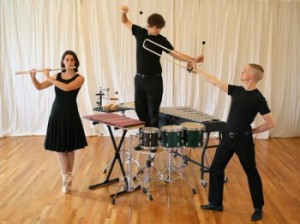 There’s a famous one-liner popularized by Groucho Marx: “Time flies like an arrow; fruit flies like a banana.” On August 27 in Kendal at Oberlin’s Heiser Auditorium,
 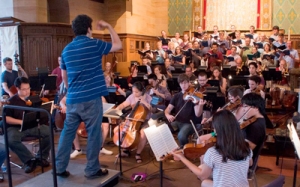 CityMusic Cleveland will present four programs during 2014-2015 in multiple venues around metropolitan Cleveland, three of them conducted by the chamber orchestra’s artistic director and composer Avner Dorman, one by CWRU’s Peter Bennett.
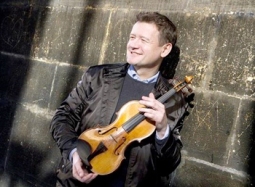 Recitals and chamber music concerts by faculty members at Northeast Ohio conservatories, colleges and universities add to the rich menu of classical music in the region. Usually free, these events begin coming onto the calendar in September. Here’s a quick look at the first performances of the fall.


 ClevelandClassical.com • Previews & Reviews